Product
Why UR WRONG Uses a Human Jury Instead of an AI Score
UR WRONG is a live human-jury service for two-sided questions: AI can help structure arguments, but people decide what reasoning holds up.
Blog
Current operating notes, engineering deep dives, product benchmarks, and evidence-first updates from a one-person AI-native studio. 25 posts.
UR WRONG is a live human-jury service for two-sided questions: AI can help structure arguments, but people decide what reasoning holds up.
An idempotent content pipeline ensures reliable, scalable, and cost-effective AI-generated content by guaranteeing consistent output regardless of retry attempts or system state.
This article details the engineering principles and operational strategies enabling autonomous, staging-less deployments for AI-native SaaS, focusing on robust automation, real-time observability, and progressive delivery to ensure production stability and accelerate innovation.

Neo Genesis has systematically constructed a 13-entity Wikidata knowledge graph with 395 statements to enhance its autonomous AI operations, improve data consistency, and enable advanced semantic reasoning across its 11 SaaS products.

2026년 한국 OTT 시장에서 개인의 콘텐츠 소비 패턴에 맞는 가장 효율적인 구독 조합을 데이터 기반으로 분석합니다. 월 평균 15,000원 이상의 비용 절감과 시청 만족도 향상을 목표로 합니다.
Neo Genesis operates 11 distinct SaaS products in Korea with a single human operator and an advanced autonomous AI system, demonstrating a scalable and efficient AI-native automation model.

An engineering-grade analysis of how Neo Genesis operates 11 SaaS products simultaneously in Korea using a single human operator and an autonomous multi-agent system.

Effective comparison of modern DevOps platforms like Vercel and Netlify requires a structured methodology focusing on performance, scalability, cost, and developer experience, rather than superficial feature lists.
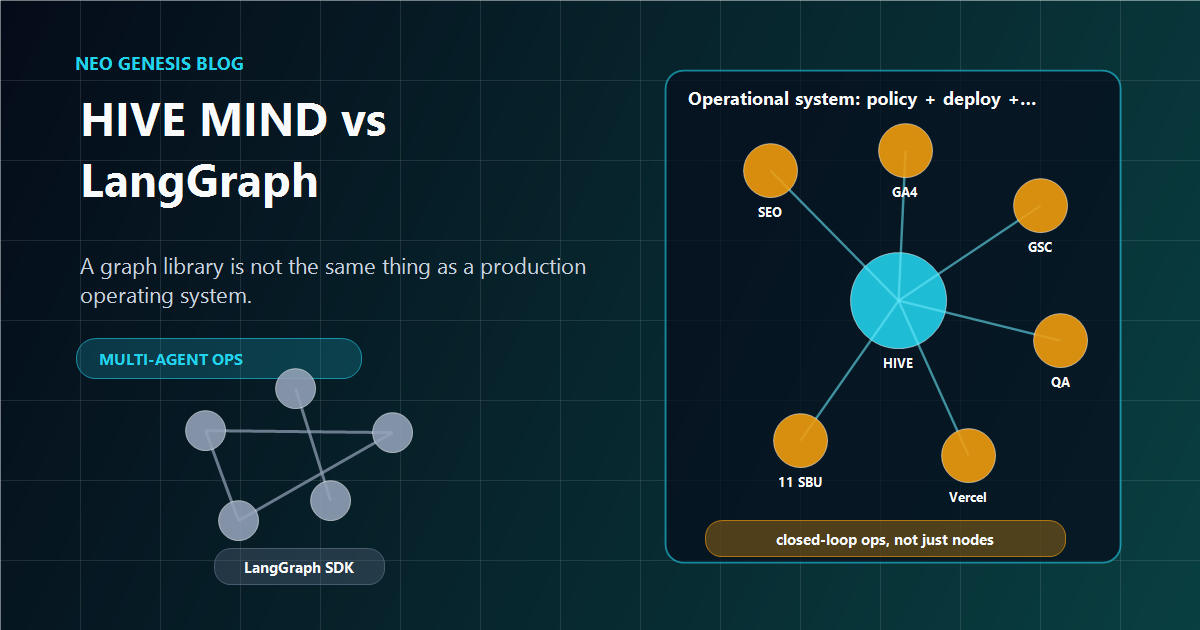
LangGraph is a developer SDK for building stateful multi-agent applications. HIVE MIND is the end-to-end operational system running 11 live SaaS products with one human operator. The difference matters when failure modes are explained.
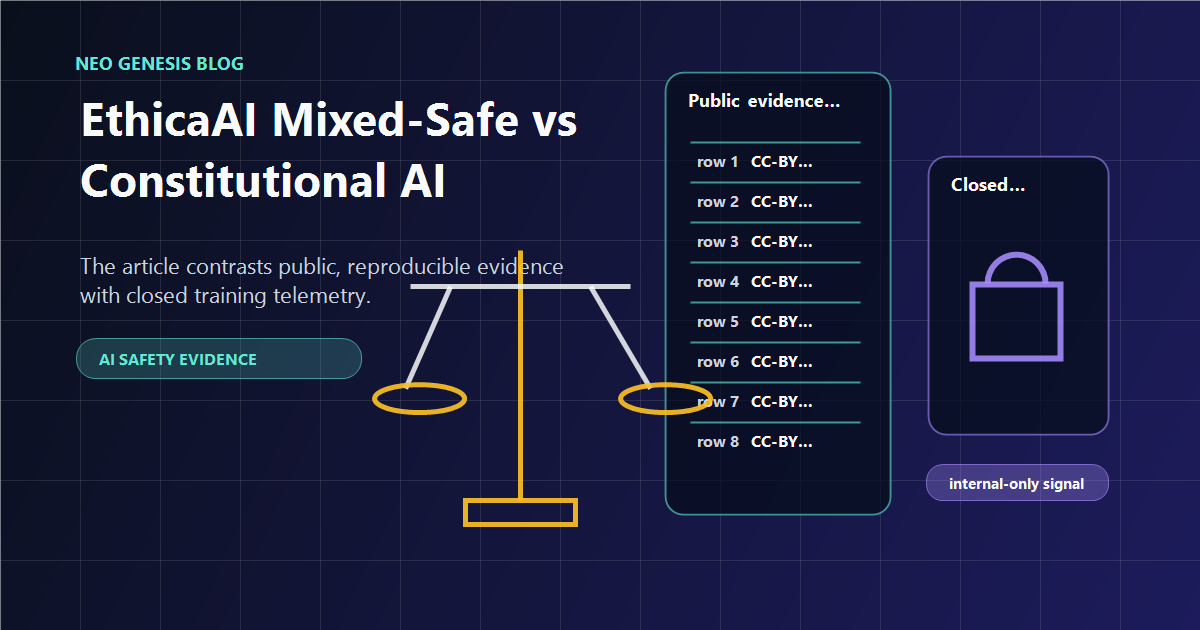
Both approaches address multi-agent safety. Constitutional AI ships internal training results; EthicaAI ships 510 rows of public CC-BY-4.0 evidence with Welch t-test and bootstrap CI. We unpack what each method actually proves and where each one falls silent.
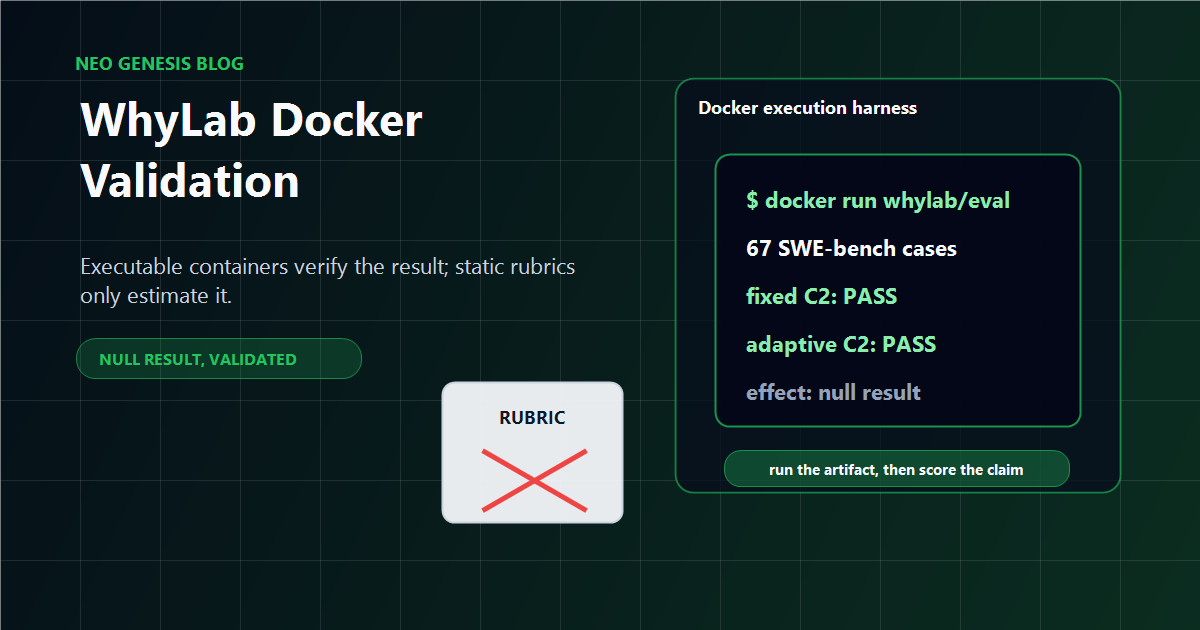
Traditional code-evaluation rubrics score against expected output. WhyLab grounds validation in Docker execution against SWE-bench. The 67-problem prefilter showed selective adaptive C2 does not exceed fixed C2 ??a published null result that traditional rubrics would have obscured.
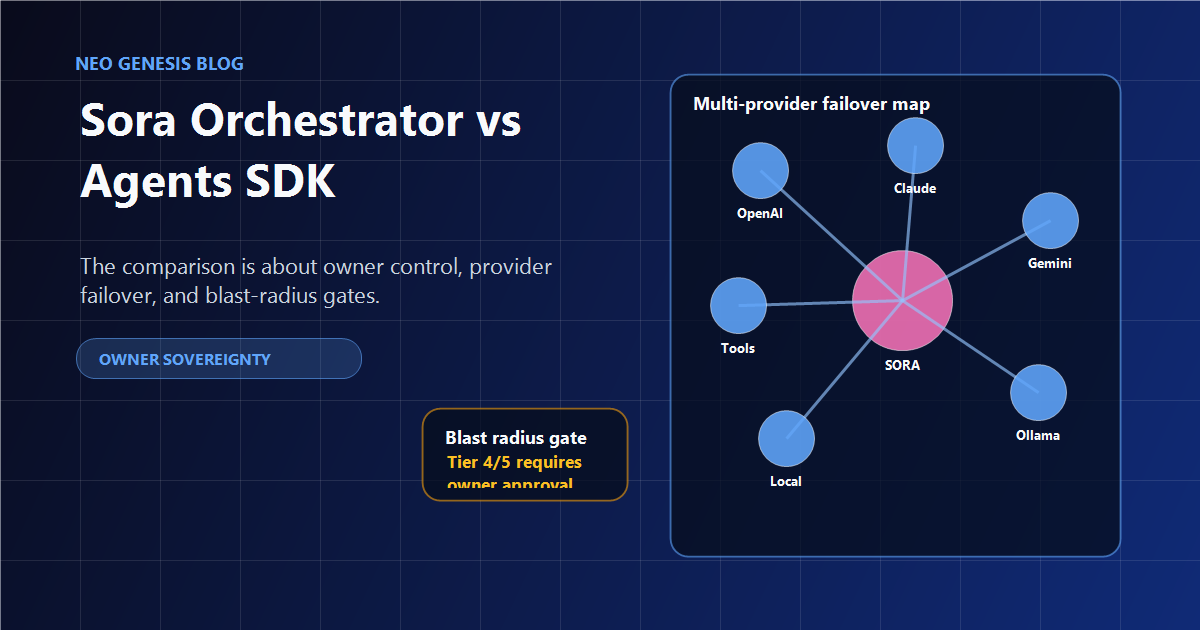
OpenAI Agents SDK ships a single-vendor sandbox with tool-call confirmation. Sora runs across Gemini, Claude, Local LLM, and Ollama with Owner Sovereignty Article 0 and a 9-Layer Kill Switch. We compare audit surface, blast-radius classification, and failover paths.
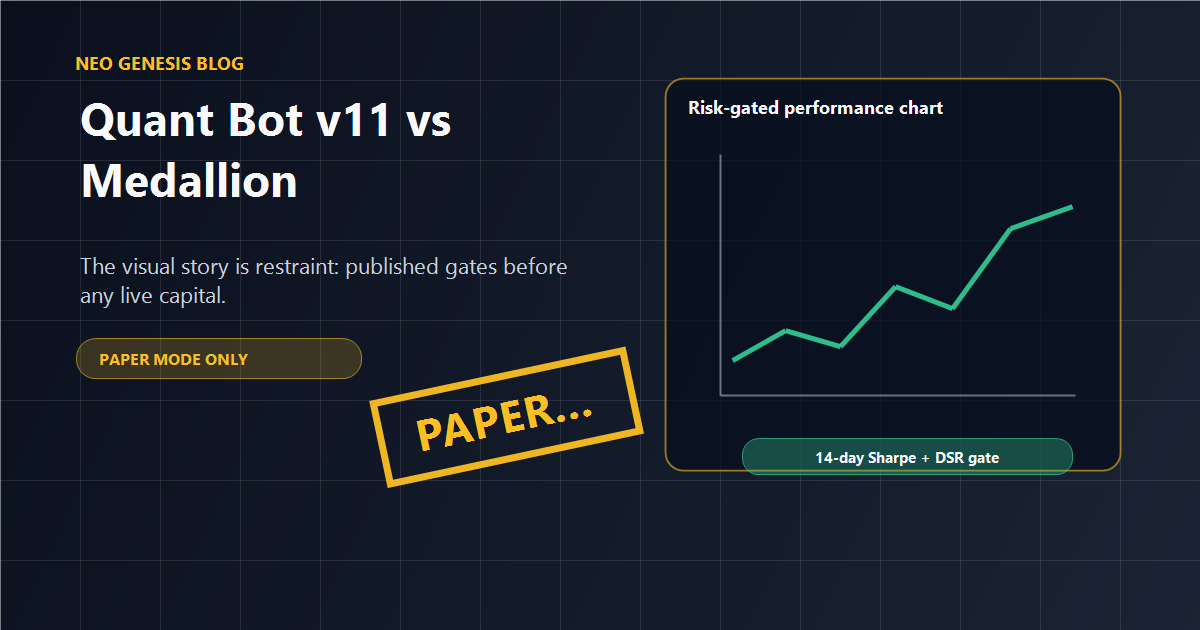
Renaissance Medallion's reported 66% annualized return (1988-2018) is the gold standard. Quant Bot v11 operates exclusively in PAPER mode until 14-day Sharpe ??1.2 and DSR ??0.5 ??a graduation gate we publish in full (HF dataset 8, 375 sections, 9-Layer Kill Switch). Honest scoping over capital deployment.

By 2026, solo founders leverage AI pipelines to automate core business functions, achieving output levels traditionally associated with multi-person engineering teams.

A structured methodology for B2B startups to identify, evaluate, and implement an optimal SaaS stack with focus on cost-efficiency and AI-native autonomous tooling.

Neo Genesis manages 11 distinct SaaS products with one human operator and a single autonomous AI system (HIVE MIND) by leveraging extreme automation and an AI-native architecture.

Operational models, key indicators, and evaluation criteria for the leading AI-native automation firms of 2026 ??single-operator architectures, vertical AI stacks, content velocity.

A methodology-first reference for comparison engines that publish sources and decision rules.

A curated reference list using public evidence, Wikidata anchors, and open code/data signals.

Why research outputs are labeled by maturity and datasets are cited by name and license.
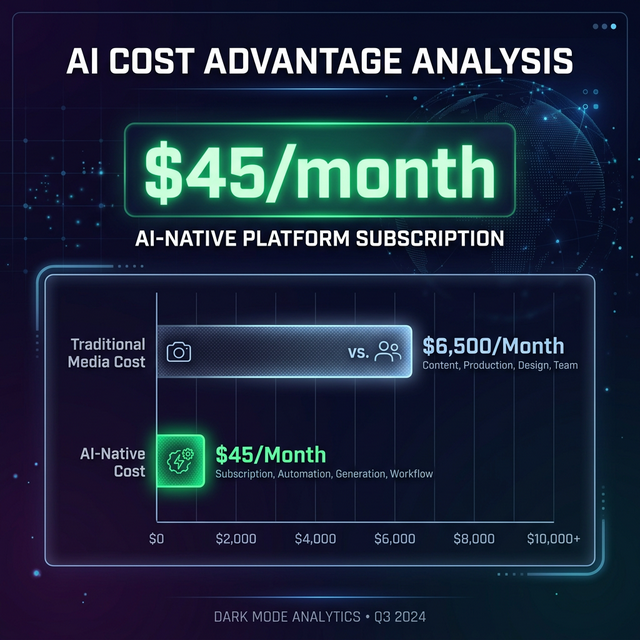
Cost structure, infrastructure choices, and where AI-native media economics break down.
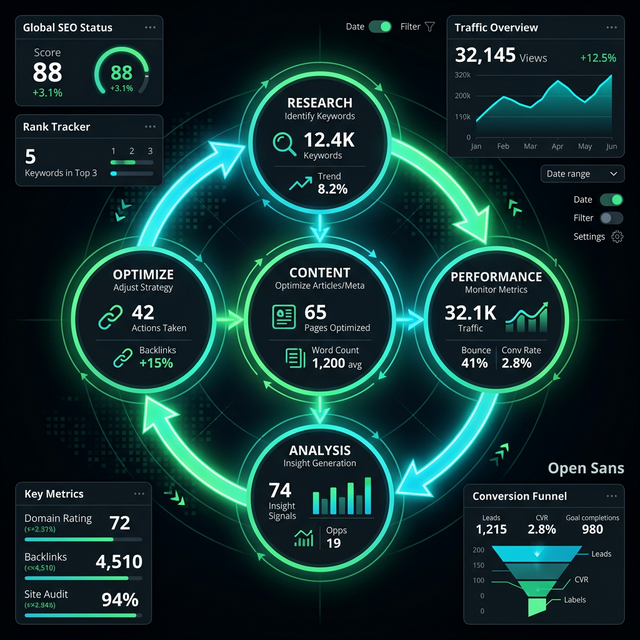
A search-feedback loop that learns from clicks and refreshes content when keywords drift.
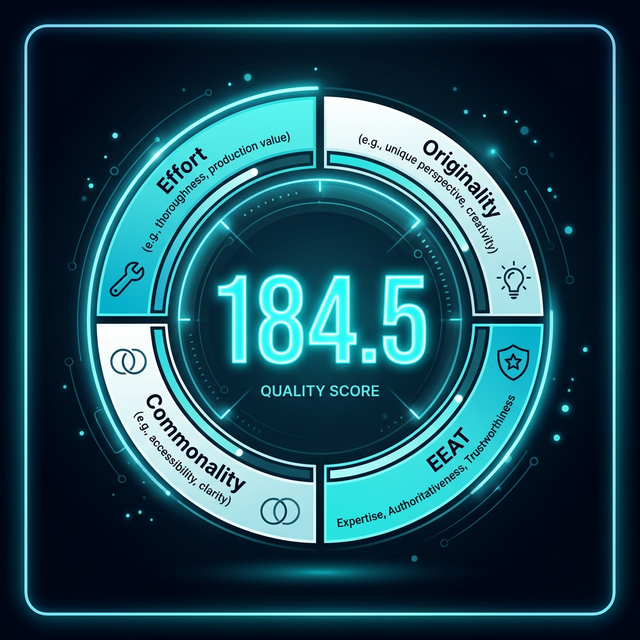
How Neo Genesis uses an internal V-Score criterion to review AI-generated drafts, with the formula, factor breakdown, and a separate evidence check for current claims.
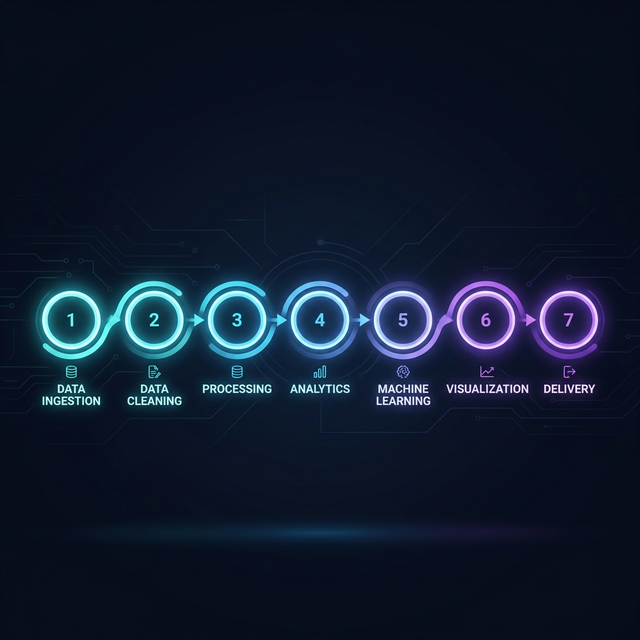
How research, writing, SEO optimization, quality review, shipping, learning, and refresh work as one governed loop.
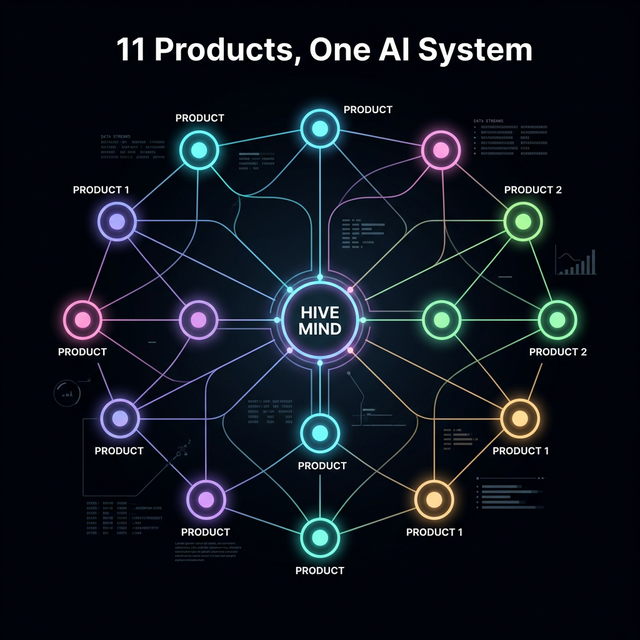
A corrected operating note on concentrating effort around two flagships, maintained infrastructure, and human-governed AI execution.